
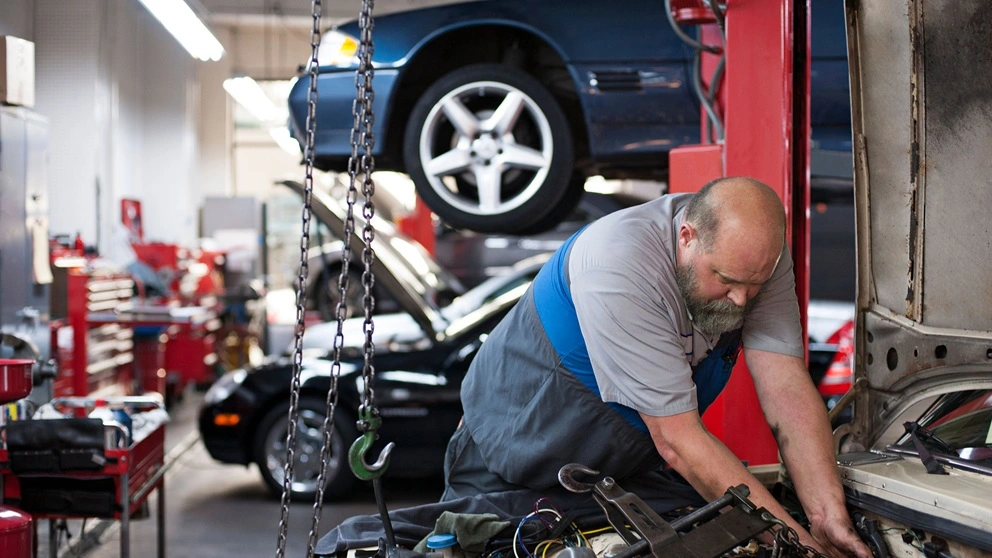
What Is a Tire Rotation?
A tire rotation means moving each tire to a different position on your vehicle, for example from front to back. Your front and rear tires wear at different rates. On most cars the front tires handle steering and, on front-wheel-drive vehicles, power delivery too, so they wear out faster.
Rotating them regularly spreads that wear evenly across all four tires. The result is longer tire life, better traction, and a smoother ride.
How Often Should You Rotate Your Tires?
The general rule: every 5,000 to 7,500 miles.
For most drivers, the easiest approach is to rotate your tires every time you change your oil. Many shops will do both in a single visit. (Not sure how often you need an oil change? Read our guide: How Often Should You Change Your Car’s Oil?)
| Vehicle Type | Recommended Rotation Interval |
|---|---|
| Front-wheel drive (FWD) | Every 5,000 – 7,500 miles |
| Rear-wheel drive (RWD) | Every 5,000 – 7,500 miles |
| All-wheel drive (AWD) / 4WD | Every 3,000 – 5,000 miles |
| Electric vehicles (EVs) | Every 5,000 – 7,500 miles (check manual) |
| Trucks used for towing | Every 3,000 – 5,000 miles |
The best source? Your owner’s manual. Some manufacturers specify exact intervals, and many tire warranties require proof of regular rotations to stay valid.
Why AWD Vehicles and EVs Need Extra Attention
AWD and 4WD vehicles are sensitive to uneven tread depth. If one tire wears noticeably more than the others, the drivetrain has to compensate for the difference, which can put extra stress on differentials and other expensive components. Frequent rotations help prevent this.
Electric vehicles are heavier than comparable gas cars and deliver instant torque, and both of these wear tires faster. EV owners often find they go through tires sooner than expected, so staying on schedule matters even more.
Common Tire Rotation Patterns
The right pattern depends on your drivetrain and tire type:
- Forward cross (FWD): Front tires move straight back; rear tires cross to the opposite side in front.
- Rearward cross (RWD / 4WD / AWD): Rear tires move straight forward; front tires cross to the opposite side in back.
- X-pattern: All tires move diagonally. Common for FWD vehicles with non-directional tires.
- Front-to-back: For directional tires, which must stay on the same side of the car.
- Side-to-side: For staggered setups (different tire sizes front and rear), often found on performance cars.
- Five-tire rotation: If you have a full-size matching spare, it can join the rotation to extend overall tire life.
A professional shop will know which pattern fits your vehicle. If you do it yourself, follow your owner’s manual.
Warning Signs You Need a Tire Rotation Now
Don’t wait for the odometer if you notice any of these:
- Uneven tread wear: One tire, or one edge of a tire, looks more worn than the others
- Vibration at highway speeds: Often felt in the steering wheel
- Car pulling to one side while driving straight
- Increased road noise from the tires
- Uneven tread depth between front and rear tires (check with a penny or tread gauge)
Vibration and pulling can also point to alignment or balancing issues, so it’s worth having a mechanic take a look. You can find auto repair shops in San Francisco, Pittsburgh, Sacramento, or other cities on AutoFixList.
How Long Does a Tire Rotation Take?
A professional tire rotation usually takes 20 to 30 minutes. If it’s bundled with an oil change, the whole visit is often under an hour.
Doing it yourself takes 45 to 90 minutes the first time, and you’ll need a jack, jack stands, a lug wrench, and ideally a torque wrench.
How Much Does a Tire Rotation Cost in 2026?
| Service Type | Average Cost |
|---|---|
| Tire rotation only (independent shop / tire chain) | $20 – $50 |
| Tire rotation at a dealership | $50 – $75 |
| Rotation added to an oil change | +$15 – $30 |
| Rotation + tire balancing | $60 – $130 |
| Rotation with new tire purchase | Often free |
Prices vary by location, vehicle size, and tire type. Trucks, performance cars, and vehicles with large or specialty wheels usually sit at the higher end.
Money-saving tip: Many tire shops include free lifetime rotations when you buy a set of tires from them. Ask before you buy.
Want to compare prices? Browse auto repair shops by city on AutoFixList and read real customer reviews before you book.
Rotation vs. Balancing vs. Alignment: What’s the Difference?
These three services are often confused:
| Service | What It Does | When You Need It |
|---|---|---|
| Rotation | Moves tires to different positions | Every 5,000 – 7,500 miles |
| Balancing | Adds small weights so tires spin evenly | New tires, or vibration at speed |
| Alignment | Adjusts wheel angles to factory specs | Car pulls to one side, after hitting a pothole, or once a year |
A rotation won’t fix a car that pulls to one side. That’s usually an alignment issue.
DIY vs. Professional Tire Rotation
Doing it yourself is free if you already own the tools, but it requires lifting the car safely and tightening lug nuts to the correct torque. Over- or under-tightened lug nuts can damage wheels or, worse, cause a wheel to come loose.
Going to a shop costs little, and a good technician will also check tire pressure, tread depth, and look for damage like bulges or nails. For most drivers, especially those with AWD vehicles or directional tires, a professional rotation is the smarter choice.
If you’re looking for a reliable shop, AutoFixList has listings in San Jose, Washington, Queens, and many more cities.
Bottom Line
For most cars, rotate your tires every 5,000 to 7,500 miles, and the easiest way to remember is to do it with every oil change. AWD vehicles, EVs, and trucks that tow may need it more often.
At $20–$50 per visit, a tire rotation is one of the best-value maintenance jobs you can do. It extends tire life, improves safety, and helps protect your tire warranty.
Ready to find a trusted shop near you? Search auto repair services on AutoFixList →
AutoFixList connects drivers with trusted local auto repair shops. Browse verified listings, read real customer reviews, and find the right mechanic for your vehicle.